The Last Man Standing
Discover the latest developments in the #FreeAmeen campaign. Ameen Alai remains the only person in America serving a federal sentence for Ibogaine - a treatment now being decriminalized and researched across the country. In an era of legal reform, he is the forgotten prisoner of a war that is ending. We invite you to explore the evidence of this injustice and join us in advocating for his freedom and the future of medical research.
National Spotlight: Evidence of Injustice
Key Takeaways
-
Unprecedented Federal Sentence: Ameen Alai was sentenced to four years in federal prison, marking the first time a U.S. citizen has been jailed specifically for an ibogaine-related distribution offense.
-
Tragedy in Broomfield: The conviction follows the 2021 death of bodybuilder Andy Haman, who suffered a fatal seizure during a basement ibogaine session. While the coroner cited toxicity, Alai argues Haman hid severe underlying health issues like sepsis.
-
Addiction Treatment Potential: Ibogaine is a West African-derived hallucinogen with significant potential to "rewire" the brain and stop cravings for opioids and alcohol, though it is currently a federal Schedule I substance.
-
Colorado’s Legal Shift: In a paradox of timing, Colorado is finalizing a framework to launch regulated, professional ibogaine treatment this year, even though selling or sharing the drug remains illegal under current state decriminalization.
-
Federal vs. State Risk: The case highlights a dangerous "grey area" for providers; despite state-level decriminalization, federal authorities can still prosecute individuals—especially when treatments result in medical emergencies or death.
Ameen Alai, Ibogaine, and the Cost of Being Early
Key Takeaways
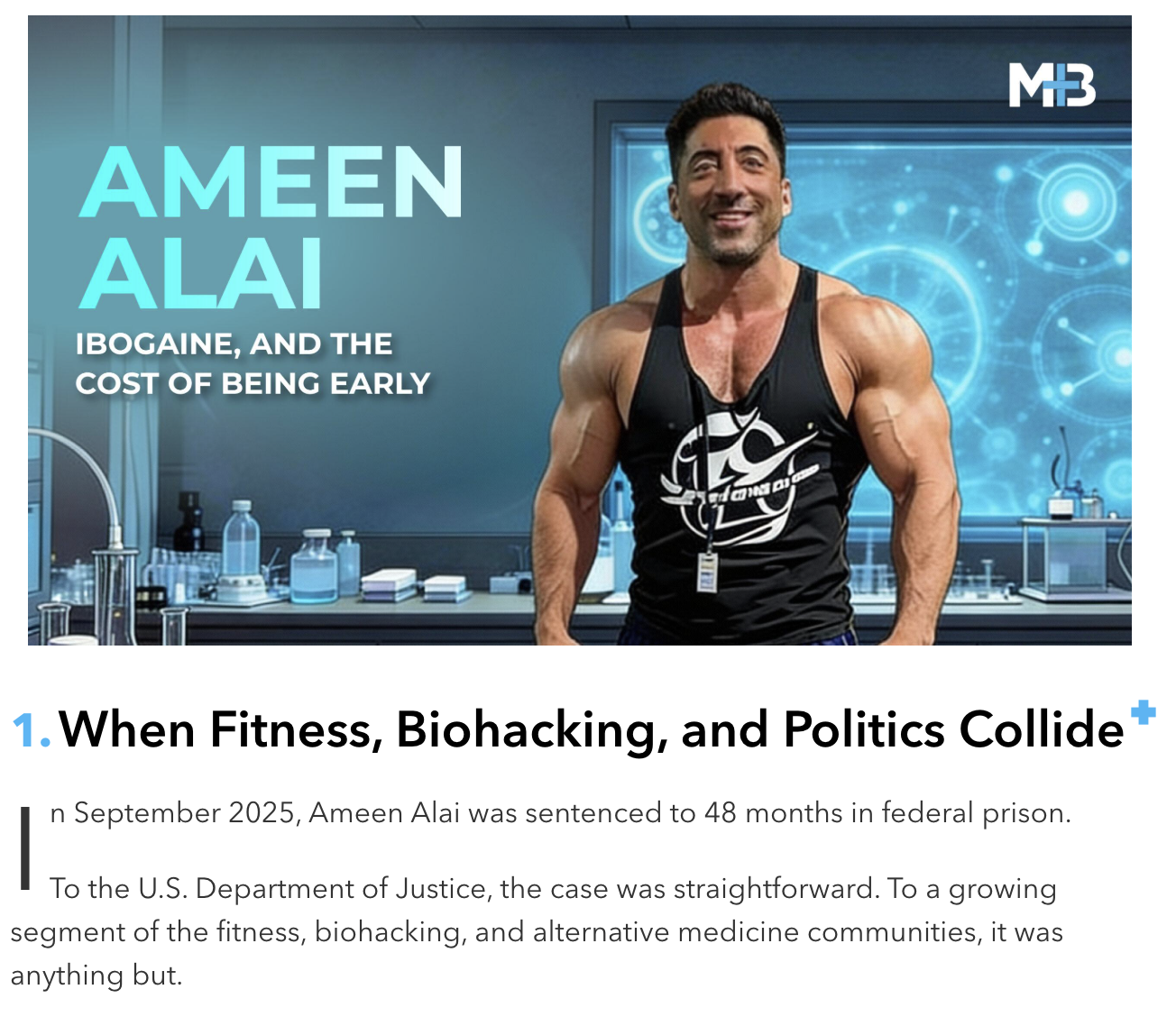
- The Ameen Alai ibogaine case sits at the intersection of fitness culture, alternative addiction recovery, and federal drug enforcement, making it far more complex than a standard criminal proceeding.
- Ibogaine remains illegal in the United States despite growing international research and use, creating ongoing tension between emerging science and existing drug policy.
- Alai’s sentencing reignited debate over whether U.S. drug laws are equipped to handle unconventional but potentially meaningful recovery approaches.
- Political and cultural attitudes toward psychedelics are shifting, particularly around veteran mental health, even as enforcement continues under outdated frameworks.
- The case highlights a recurring pattern in health innovation: those who operate ahead of regulation often bear the consequences before policy and consensus catch up.

Public outcry: demanding a pardon
Experience the growing wave of public and political support demanding a pardon for Ameen Alai. Our 'Pardon' section showcases influential articles, such as The Artvoice piece, which powerfully declares: "This is a crucifixion of a researcher to satisfy a legacy legal system that no longer fits the modern world." Join the chorus of voices advocating for legal justice and the re-evaluation of outdated policies.
Campaign Updates & Original Reports